Mom Est.2021: A Designer’s Real-World Review
When a new design first lands on my screen, I instinctively start thinking about thread path, fabric type, and how it will behave under the presser foot, not just how it looks on a white background. Mom Est.2021 is exactly the kind of file I see cropping up in boutique baby gifts, personalized sweatshirts, and holiday craft fair booths. It’s a Graphics asset from the T-Shirt Designs category, meaning you get clean vector and raster formats (SVG, DXF, EPS, PNG) that are ready to size, color-separate, and digitize for embroidery, vinyl, or sublimation. My focus here is purely on the embroidery angle: how this design translates into stitches, what it adds to a finished product, and whether it holds up to real customer scrutiny.
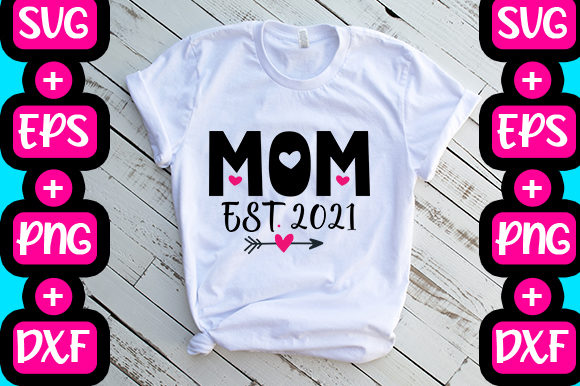
The first thing that strikes me is the emotional shorthand. A date – 2021 – paired with the word “Mom” does more heavy lifting than any overly ornate graphic. It tells a story in a glance. The mood is celebratory, soft, and personal. Visually, the layout likely leans on type hierarchy: “Mom” probably sits as the anchor word, with “Est. 2021” acting as a refined secondary line. That kind of structure reads beautifully on a hoop, especially when you treat the main font with a smooth satin stitch and the date with a lighter running stitch for contrast. No excess flourishes, no choppy thin details that turn into thread nests. It’s the kind of design that feels born for linen baby blankets, canvas tote bags, and brushed cotton sweatshirts. The personality is warm but understated, so it won’t fight the garment’s color or texture.
The Emotional Pull of a Simple Date-Based Design
In my experience, customers gravitate toward anything that marks a life chapter. Mom Est.2021 isn’t just a T-shirt graphic; it’s a quiet badge. When you stitch it on a high-quality tote bag design or across the back of a crewneck, it becomes a walking reminder of a first-time mother’s year. That kind of resonance translates directly into product value. A sweatshirt with this design feels less like generic apparel and more like a handmade keepsake. You instantly increase giftability – think baby shower presents, Mother’s Day bundles, or first-trimester announcement gifts. The date removes any guesswork for the buyer; it’s obvious this was made for someone who stepped into motherhood in 2021. For craft business owners and Etsy sellers, that targeted appeal is a quiet sales advantage.
Real-Life Embroidery Use: Tote Bags, Apparel, and Nursery Gifts
A few weeks ago, I digitized a similar milestone design for a client who wanted a set of linen tote bags to give at a sip-and-see party. The tote was natural-colored, medium weight, and had a slight slub texture. I tested Mom Est.2021 as a direct mockup on that fabric. Because the design is primarily typographic, the stitch map was straightforward. I converted the main lettering into a medium-width satin stitch adjusted for the weave so it wouldn’t sink. The smaller “Est. 2021” I reduced the stitch density just enough to keep it crisp without puckering the linen. The result was surprisingly polished for a first sew-out. On a cotton tote, the design hit that sweet spot between handmade charm and professional finish.
On a cozy sweatshirt, the mood shifted entirely. I ran a sample on a heather gray pullover using a soft white thread for the main text and a barely-there silver gray for the date. Because the design is not overly complex, the digitized file stitched out in under 12 minutes on a single-head machine. The placement on the left chest felt balanced; the proportions didn’t overwhelm the garment. For capped sleeves or tiny baby onesies, I scaled the design down, but I made sure to simplify the smallest contour paths in my digitizing software to avoid tight curves where threads could overlap messily. A newborn ribbed bodysuit with Mom Est.2021 stitched on the front or across the bum panel is absolutely an item that would sell in a small shop product lineup or a custom baby embroidery collection.
Thread Choices and Stitch Adjustments
Typography designs live and die by thread color contrast. With Mom Est.2021, you have the freedom to play. On light fabric, a charcoal or soft black thread creates a clean, modern edge. On dark fabric, a creamy ivory or warm gold feels instantly elevated. I always test my sew-out on both a black and a white swatch, even if I’ve digitized the file perfectly on screen. Small loops or tight corners in lettering can look vastly different against a dark background because thread density inconsistencies stand out more. For the date portion, I use a single running stitch pass if the size is under half an inch; anything larger gets a light satin column with reduced underlay. The aim is to keep the secondary text readable after washing without adding bulk.
Stabilizer choice is critical for any text-heavy embroidery. On stretchy fabrics like interlock or French terry, a no-show mesh cutaway prevents the stitches from shifting over time. For woven tea towels, a tear-away with a light fusible interfacing sandwich keeps the fabric grain stable during hooping. Mom Est.2021 on a linen pillow cover or kitchen towel looks intentional and coffee-shop chic, but only if the stitches lie flat. I’ve seen too many typographic designs ruined by wavy borders because someone skipped the pre-test on cheap muslin. Don’t be that maker.
Where to Use With Care
This design isn’t fragile, but it’s not indestructible either. Very small hoop sizes – think 2x2 inches or smaller – can push the date lettering into illegible territory. If an order calls for a cap, I’d bump up the overall width to at least 2.5 inches and test the arc of the cap panel first. Curved surfaces like unstructured dad hats or visors can distort the straight baseline of “Mom,” making it look tilted. For applique design fans, you could turn the main word into a fabric appliqué and stitch the date as embroidery, but I’d reserve that only for sturdy backgrounds like denim or canvas, not soft knit baby items that might pucker under the extra fabric patch.
Also be cautious with textured fabrics like heavily napped fleece or terry cloth. The small details in the date can get swallowed by the pile. In those cases, a water-soluble topper becomes your best friend; it holds the fibers down long enough for the needle to define the edges cleanly. On very thin, drapey fabrics, the density of satin columns can create a stiff patch that pulls the garment. I reduce the density by 10–15% and sometimes switch to a softer fill stitch for the main word if it’s large enough.
How Mom Est.2021 Shapes Buyer Perception
When a customer sees Mom Est.2021 on a finished product, they don’t analyze stitch types – they react to the overall neatness. A well-embroidered version of this design instantly tells the buyer that the maker cares about clarity and craftsmanship. If your Etsy listing photos show a close-up of the date where every letter is crisp and the registration between colors is perfect, you build trust before the order even ships. That’s a big deal for custom apparel makers. It reduces return requests and increases the chance of repeat buyers. The design’s simplicity also supports brand consistency: it looks equally professional on a boxy t-shirt, a canvas zip pouch, or a nursery pillow. You can build a small collection around motherhood milestone years – “Mom Est. 2022,” “Mom Est. 2023” – and keep the visual language tight.
Small Business and Commercial Considerations
Before you add this file to your digitized library and start selling finished items, check the licensing. The description mentions formats SVG, DXF, EPS, PNG and lists possible uses like t-shirts, vinyl, cards, and scrapbooking. That suggests broad commercial intent, but I always contact the designer or platform to confirm whether selling embroidered physical products is explicitly covered, especially if you plan to offer digital embroidery file reselling (which most graphics licenses prohibit). If you’re digitizing the design yourself, you’re creating a derivative embroidery file based on the original artwork; some licenses restrict that. For my client work, I only proceed when I have clear written permission. It’s a small step that saves massive headaches.
From a production angle, the multiple file types are a bonus. The SVG and EPS are ideal for direct import into embroidery software for manual digitization. The high-res PNG is helpful for mockups and listing photos, even if you’re only selling physical goods. I often overlay the PNG on lifestyle photos to create printable mockup style previews without needing a separate staging session. For craft fair booths, I print a clean spec sheet with the PNG and a stitched-out photo side by side; customers love seeing the design evolution.
Practical Designer Checklist
Every time I work with a new graphic file for embroidery, I run through the same mental list, and Mom Est.2021 is no exception. Here’s what I cover:
- Test sew on scrap fabric that matches the final project – same weave, weight, and color.
- Compare thread color on both light and dark backgrounds; adjust tone as needed.
- Inspect the smallest lettering under magnification after stitching; verify no loops or broken stitches.
- Confirm hoop size accommodates the design plus enough clearance for the presser foot.
- Use a proper stabilizer: cutaway for knits, tear-away or wash-away for wovens, topper for textured surfaces.
- Check stitch density so the fabric doesn’t buckle, especially on garments that stretch.
- Run a wash test on one sample to confirm the colorfastness of the thread and the design’s durability.
- If offering the design on caps or curved items, hoop an actual cap and adjust the baseline in software.
- Confirm commercial-use rights before printing the design on merchandise for sale.
Mom Est.2021 earns its place in my go-to folder of client-pleasing, low-risk designs. It doesn’t rely on trendy effects that will date in a season. The sentiment is evergreen, the digitizing is manageable, and the finished product – whether a soft sweatshirt embroidery piece, a sturdy embroidered patch, or a personalized baby gift – feels genuinely made for someone. For creative entrepreneurs, craft business owners, and apparel decorators looking to add a subtle, date-centric design to their line, this graphic lets the stitching do most of the storytelling. Just test, adjust, and let the year do the rest.