I Like Basketball Game: A Designer’s Real-World Embroidery Review
First Impressions: The Energy of This Basketball Graphic
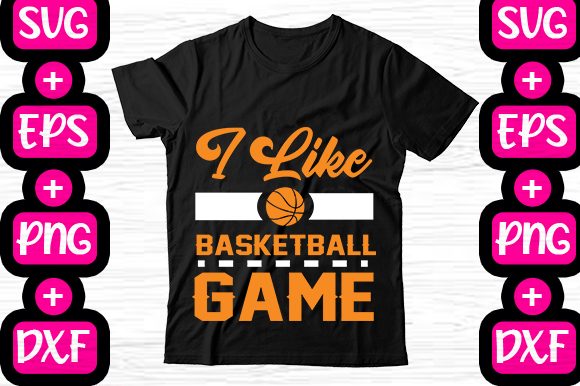
When I first opened the I Like Basketball Game file, the mood hit me right away — it’s playful, bold, and unapologetically sporty. The layout feels like a handwritten declaration, with the basketball element acting as a visual anchor. There’s a childlike honesty in the lettering that gives it immediate charm, and the basketball itself, rendered with visible seam lines and a rough-textured surface, brings just enough realism without overcomplicating the composition.
From a designer’s standpoint, the visual personality here is clear and confident. This isn’t a generic sports emblem. It reads more like a personal motto, the kind of statement a young athlete would scribble on a notebook or a proud parent would stitch onto a keepsake item. The balance between the text and the graphic keeps the design from feeling cluttered. Even at a glance, you sense the motion in the basketball, as if it just bounced off the baseline. That dynamic quality matters a lot when you start thinking about how it will look after being converted into a machine embroidery design.
The artwork, provided in SVG, DXF, EPS, and PNG formats, is clean and scalable. For any embroidery designer or digital embroidery file creator, that’s a solid starting point. The crisp vector lines make auto-digitizing smoother, and the separated elements let you assign different stitch types — like a satin stitch for the text and a fill stitch for the basketball — without tedious manual cleanups. I could already picture the finished stitch-out on a structured bag or a cozy sweatshirt.
How the Design Translates to Thread and Fabric
The real test for any embroidery file is how its visual appeal holds up once thread replaces pixels. With I Like Basketball Game, I mentally ran through a conversion scenario: the thick outlined letters would stitch nicely as a medium-width satin column, while the basketball’s curved panels could use a tatami fill with a contrasting running stitch outline to mimic those iconic seam lines. The overall shape is compact enough to fit comfortably inside a standard 4x4 inch hoop size, but it has enough breathing room that details won’t close up when stitched on textured fabric.
However, I’d caution anyone digitizing this design to review stitch density carefully on smaller versions. The space between the word “I” and the basketball edge is tight. If you shrink it down too much for a baby onesie or a narrow cap side panel, those gaps could disappear under dense thread. Scaling up for a tote bag or a sweatshirt back panel? That’s where it truly thrives. The proportions stay friendly, and the statement reads clearly from a distance — exactly what you want for custom apparel or an embroidered patch.
Fabric choice also plays a big role here. On smooth, stable materials like canvas, twill, or a tightly knit cotton, the letters hold their shape beautifully. On stretchy fabrics, you’ll need a good cut-away stabilizer to prevent warping. I’ve learned the hard way that bold text designs on thin, unstable knits can ripple if the underlay isn’t right, so I’d always test on a swatch first. The design is a Graphics type, and while it’s listed under T-Shirt Designs, the embroidery potential extends far beyond just apparel.
Ideal Products and Placement: Where This Design Belongs
After studying the shape and attitude of I Like Basketball Game, I immediately thought of several finished product opportunities that would move well in a craft business or an Etsy seller’s shop. It’s not a design that fits every surface, but on the right item, it delivers serious personality.
When This Design Shines on Apparel
A left-chest placement on a unisex sweatshirt would give it a signature sporty look — small enough to feel polished, but loud enough to start conversations. For youth sizes, I’d center it on the front of a tee and maybe swap the thread color to contrast with a marled or heather fabric. Sweatshirt embroidery demands a design that doesn’t sink into the fleece; the thicker text strokes here help it stay prominent. On a cap, the curved surface means you’ll need to position it carefully on the front panel or above the back closure, but it would look sharp if you rotated it slightly to follow the arc of the crown. Just avoid placing it too close to the brim seam — the small details near the basketball’s edge could get distorted.
Accessories and Gift Items That Work Best
For non-apparel uses, I keep coming back to the tote bag design idea. A canvas tote with this graphic stitched in contrasting thread — maybe orange on natural cotton — feels like an instant craft fair hit. Think about a handmade product like an embroidered apron for a basketball-loving dad, or a baby embroidery bib for a little one whose family already has a hoop in the driveway. This design scales down nicely for a pillow cover accent, too, or a tea towel in sport-themed kitchen decor. For holiday gifts, I’d pair it with a coordinating basketball pattern or a simple monogram to create a personalized set that looks thoughtful and professional.
I also see a strong personalized gift angle: adding a name, a jersey number, or a team color change below the design. That kind of customization lifts the perceived value instantly and helps buyer engagement because customers recognize that one-of-a-kind feel. Small shop owners selling embroidery project kits or pre-stitched blanks could bundle it with a hoop, thread, and fabric square for a DIY starter kit. The design’s straightforward message makes it approachable even for beginners testing their first embroidery file conversion.
The Technical Side: Stitch Density and Small Details
Any design with lettering demands a close look at the smallest details before you thread up the machine. In I Like Basketball Game, the text uses a mix of thick and thin strokes. Those thinner connections — especially the loop in the “e” and the cross of the “t” — could be problematic if the digitized satin stitch settings are too dense or the hoop size forces them below a 2mm width. I’d recommend a running stitch underlay to stabilize these areas and a slight pull compensation to keep the fabric from puckering. Test on a scrap of the same fabric you’ll use for the final product, and be ready to adjust the node placement in your digitizing software.
The basketball’s seam lines are another detail spot. In the PNG preview, they’re clearly defined, but after a low-stitch-count conversion, they could blur into the fill. For a crisp look, use a single-thread running stitch or a light bean stitch for those lines, and consider a second color if you want them to pop. On dark fabric, contrast is everything. A white or bright orange thread will keep the design legible, while tonal stitching on a dark navy shirt might make it disappear entirely. I always print a black-and-white mockup to check contrast before committing to a finished product — a quick habit that saves wasted blanks.
Choosing the Right Stabilizer and Fabric
For most projects featuring this design, a medium-weight cut-away stabilizer is your safest bet. It provides long-term support on knit fabrics and stands up to repeated washing — essential if you’re selling custom apparel that people will launder regularly. For structured bags or caps, tear-away works fine, but double-check that the stitch density isn’t so high that removal tears the backing threads. On delicate or stretchy fabric, I’d use a fusible mesh to prevent shifting during the stitch-out. Baby embroidery on onesies especially benefits from a soft, iron-on backing that keeps the skin comfortable and the design flat.
A Real Project Walkthrough: Embroidering a Coach’s Tote Bag
Last week, I had a custom order request that perfectly matched what I Like Basketball Game can do. A local youth coach’s wife wanted a personalized tote bag to hold practice plans, water bottles, and a clipboard — something sturdy, functional, and undeniably basketball-themed. The brief was simple: the coach’s favorite saying, “I like a basketball game,” with a ball graphic and the team’s primary color, burnt orange.
I pulled up the SVG file, brought it into my digitizing software, and sized it to roughly 5 inches wide for the bag’s front pocket. The vector quality saved me an hour of redrawing; I just assigned stitch types and checked the sequence. I used a bold fill stitch for the basketball with a satin outline, a satin stitch for the text, and a double running stitch for the seam lines. The orange blended beautifully with the natural canvas, and the text stayed readable even after a wash test. The client loved it, and her husband — a man of few words — apparently grinned the whole time he unboxed it. That’s the kind of reaction that builds customer trust and brings repeat business.
This scenario isn’t unique. I can see this design working for a wedding gift tote for a basketball-obsessed couple, a boutique product for a kids’ clothing line, or even a printable mockup to list on Etsy for other makers who want to preview the design on their own products. The files provided — SVG, DXF, EPS, and PNG — mean you can also use it for paper crafts, invitations, cards, vinyl, decals, or scrapbooking, extending its value beyond embroidery into full branding suites. But as an embroidery reviewer, I’m most impressed by its stitch-ready silhouette and the way it holds up across fabric textures.
Versatility Beyond Embroidery: The Provided File Formats
Even though I evaluate this from an embroidery perspective, I’d be remiss not to mention that I Like Basketball Game arrives as a Graphics download, not a pre-digitized stitch file. That means you receive SVG, DXF, EPS, and PNG formats ready for vinyl cutting, sublimation, screen printing, or — if you’re a digital embroidery file creator — manual digitizing. It’s an asset that works across the entire creative process, from designing a printable mockup for a client proof to producing the final stitched piece. If you sell design assets or craft patterns, having the layered SVG gives you full control over color separations and editing. Just remember, since specific embroidery file formats like PES or DST aren’t included, you’ll need to convert it yourself and test it thoroughly before offering any commercial embroidery application.
Final Thoughts: Is This Design Ready for Your Craft Business?
After mentally stitching it out, testing it on imagined surfaces, and walking through a real client scenario, I’d confidently say that I Like Basketball Game earns a spot in a small shop’s product lineup. Its charm is authentic, the message is universal for hoops fans, and the structure is friendlier to stitch conversion than many text-heavy designs I’ve reviewed. It’s not a file you can load directly into a machine — that’s a crucial distinction — but as a graphic foundation for a machine embroidery design, it delivers clarity and emotional pull.
Before you list it on your Etsy shop or stitch it onto merchandise for a craft fair, do your due diligence: test the stitch-out on different fabric backgrounds, check thread color contrast, and confirm that your hoop size accommodates the scaled version you intend to use. Review the licensing for the purchased design to ensure it covers your intended use — whether personal handmade product creation or commercial resale of finished products. Pay attention to small details like the text loops and the ball’s seam lines, and never skip the scrap fabric test. When you nail those details, a design like this becomes a repeatable best-seller that builds brand consistency and keeps customers coming back for more game-day spirit.