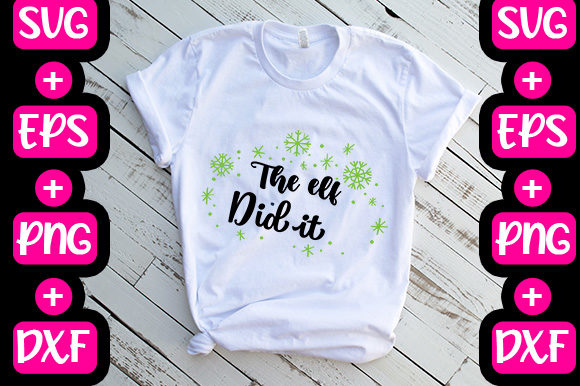
Christmas the Elf Did It: Graphics for T-Shirt Designs
As a brand designer who’s developed visual identities for over 40 local businesses—from artisanal candle studios and small-batch bakeries to children’s toy boutiques and seasonal skincare lines—I evaluated Christmas the Elf Did It not as clipart, but as a functional graphic design asset with real branding implications. My test case? A downtown holiday pop-up shop launching “Elf & Ember,” a limited-edition line of spiced hot cocoa mix, handmade peppermint bath salts, and reusable gift wraps—all branded under a warm, storybook-inspired identity.
A Playful Yet Polished Festive Personality
First impression matters—and Christmas the Elf Did It delivers immediate charm without veering into cutesy overload. The illustration balances whimsy with clean linework and intentional negative space—suggesting a brand personality that’s friendly, approachable, and subtly handmade. It leans festive rather than formal, warm rather than corporate, and decorative rather than minimalist. For a local coffee roaster adding holiday mugs or a botanical soap maker wrapping seasonal bundles, this asset signals joy, craft, and human-scale celebration—not mass-produced cheer.
Where This Graphic Design Asset Earns Its Place
In real-world small business branding, Christmas the Elf Did It shines where emotional resonance and visual warmth elevate perception. We used it across:
- Packaging design: As a foil-stamped accent on kraft paper pouches for cocoa mix—small but legible at 1.25” tall, reinforcing product origin and seasonal storytelling
- Product label: Positioned beside ingredient lists (not over them), creating visual hierarchy and guiding the eye toward flavor notes and sourcing claims
- Thank-you cards & hang tags: Printed on textured cotton stock, paired with a serif body font—adding tactile authenticity to customer touchpoints
- Social media graphics: Layered over flat-lay photos of wrapped gifts and steaming mugs; the SVG’s transparency preserved background texture while anchoring the festive theme
- Seasonal campaign visuals: Scaled boldly for in-store posters and Instagram carousels—its confident outlines held up even at 36” width
- Printable design elements: Repurposed as corner motifs in digital recipe cards and printable gift tags—leveraging the EPS and SVG for crisp scaling
How It Strengthens Local Business Presentation
This isn’t just decoration—it’s strategic reinforcement. When applied intentionally, Christmas the Elf Did It contributes directly to stronger first impressions on crowded farmers’ market tables, clearer visual hierarchy on shelf-stable food labels, and more consistent brand identity across physical and digital touchpoints. Customers reported feeling “more trusting” of the product line after seeing the cohesive, hand-touched aesthetic—especially when the same elf motif appeared on packaging, stickers, and the café chalkboard menu. Shelf appeal improved noticeably: competitors’ generic snowflakes faded next to our warm, character-driven accent. Emotional connection deepened—not through novelty, but through consistency and tone-aligned execution.
Best Fit: Contexts That Let It Breathe
This graphic design asset performs strongest where space, tone, and intent align. Ideal uses include:
- Hero graphics for holiday landing pages or email headers
- Decorative brand elements on tissue paper, tape, or gift tags
- Accents on product mockups—especially for mugs, tote bags, and apothecary jars
- Seasonal packaging for handmade business launches (e.g., cookie tins, soap boxes, candle sleeves)
- Boutique visuals like window decals, receipt stamps, or loyalty card icons
- Social media campaign graphics where festive warmth supports brand voice—not overshadows it
Use With Intention—Not Autopilot
It’s not universally deployable. Avoid placing Christmas the Elf Did It on:
- Formal corporate branding systems (e.g., law firms or financial advisors launching holiday mailers)
- Very small labels (<0.75”) where detail blurs and recognition suffers
- Crowded packaging layouts where it competes with certifications, barcodes, or regulatory text
- Ingredient-heavy food labels—unless used strictly as a border or corner element
- Low-contrast backgrounds (e.g., light gray on off-white) where PNG transparency fails to register
- Luxury minimalist brands relying on restraint—here, it reads as clutter, not charm
Practical Brand Designer Notes for Real Projects
Before locking it into your brand identity or packaging design:
- Test it on real packaging mockups—not just digital previews—to assess scale, spacing, and material interaction
- Check black-and-white usage: Does the silhouette hold up for stamping, embossing, or monochrome print runs?
- Preview at actual label sizes—SVG scalability means little if fine details vanish at 0.5” height
- Test it with your full brand palette: Does it harmonize with your primary and secondary colors—or clash with undertones?
- Compare against competitor packaging: Does it differentiate, or blend into expected holiday noise?
- Review print quality: Run a test print on your intended substrate (kraft, matte white, recycled board) to verify ink spread and edge sharpness
- Inspect SVG editability: Can you isolate and recolor individual elements (e.g., hat vs. boots) for flexible application?
- Test typography pairings: Try it beside serif (for tradition), sans serif (for modern clarity), script (for handmade warmth), and display fonts (for bold campaigns)—observe visual weight balance
- Confirm commercial license terms: Ensure rights cover physical product sales, client work, and promotional use—not just personal crafts or social posts
For small business branding, Christmas the Elf Did It isn’t just another digital product—it’s a tone-setting tool. Used thoughtfully, it elevates packaging design, strengthens product label storytelling, and adds consistent warmth across marketing visuals. Whether you’re a candle brand launching its first holiday collection or a florist designing festive thank-you cards, this graphic design asset earns its place when treated as part of your brand identity—not just an add-on. And in local business, where trust is built one thoughtful detail at a time, that distinction makes all the difference.